
How to accumulate review results into rules for the next post
Many content systems say they review every post, but the same problems keep returning. The image still contains text. The hero and inline image still overlap. The article still flattens out after the intro. When that happens, the review process is producing comments, not improvement.
A review only becomes operationally valuable when its result changes the next draft. That means repeated findings have to become rules, not memories.
This post is about building that transition on purpose. The goal is not storing every comment forever. The goal is reducing the chance of repeating the same mistake in the next post.
1. The common mistake is treating review as post-specific cleanup
Many teams review one article, fix one article, then move on. That feels productive because the current piece gets cleaner. But system-wise, nothing changed. The next draft still starts from the same weak defaults.
That is why review can feel expensive. You spend time identifying issues, but the same categories come back because the process has no memory layer.
2. Review results only compound when they are rewritten as reusable rules
This is the central shift. A review note is usually tied to one artifact. A rule is tied to the next decision.
For example, “this image feels too abstract” is a useful review comment for one post. But it becomes operationally useful only after it turns into a rule such as “developer and ops posts must show concrete objects or structure, not abstract signal flow.” The first sentence explains what went wrong. The second sentence changes the next image prompt.
The same applies to writing. “This section feels thin” is a comment. “Every post must have one section that carries the most weight, with two concrete examples or consequences” is a rule. Once the rule exists, the next draft starts stronger before review even begins.
This is where automation matters. If repeated findings are translated into a small rule set, the system can inject them into the next workspace, review checklist, or image prompt template automatically. That is when review stops being a cleanup ritual and becomes a compounding quality loop.
Without that rewrite step, the system remains dependent on human memory. And human memory is exactly what fails under speed, fatigue, or repetitive production. The stronger system does not trust the writer to remember everything. It encodes the lesson where the next draft is made.
3. Split review output into throwaway notes and reusable rules
Not every comment deserves a permanent rule. A useful split is simple:
- throwaway note: specific to one post, one image, or one awkward sentence
- reusable rule: likely to improve the next similar post too
- template update: strong enough to change the default drafting or image prompt structure
If every note becomes permanent, the system bloats. If nothing becomes permanent, the system forgets.
4. Store the rule where the next draft will actually touch it
A hidden archive is not enough. If the next draft starts in a post workspace, the rule has to live in the workspace template, checklist, or the blog-specific memory file that gets read before drafting.
That is why rule location matters as much as rule wording. A good rule in the wrong place is still easy to ignore.
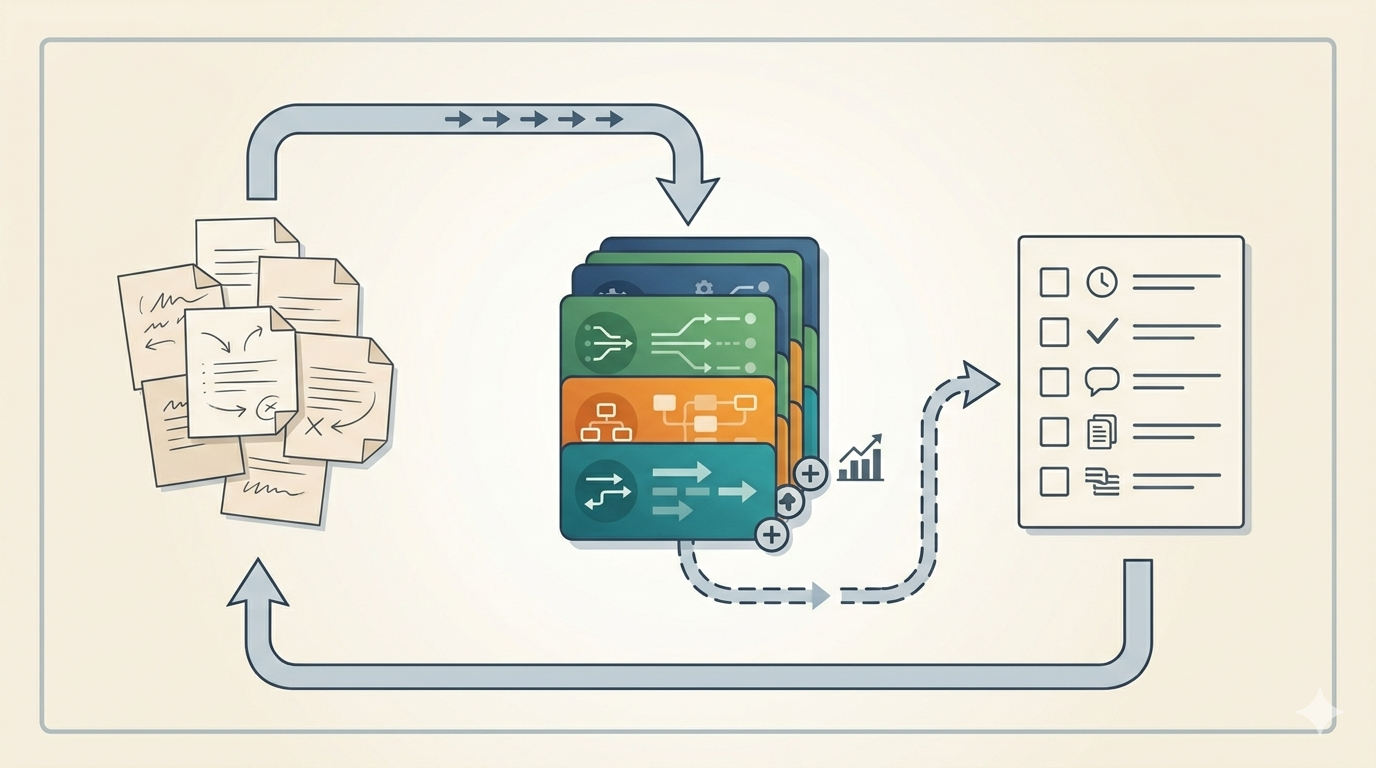
5. One concrete loop shows whether the system is improving
Suppose three reviews in a row complain that hero images are abstract and inline images repeat the same idea. That should not remain three separate observations. It should create two new defaults: the hero prompt must define one clear contrast scene, and the inline prompt must define one explanation structure with a different role. If the fourth post starts from that rule, review time is already cheaper.
The same loop works for article structure. If two posts in a row feel flat, the fix is not “write better next time.” The fix is updating the template so the main section is explicitly heavier and examples are mandatory. Once that change lands in the drafting layer, quality starts earlier.
What to do first
Take the last three review notes you repeated most often and rewrite each one as a rule for the next draft. If the rule cannot change the next workspace, checklist, or prompt, it is still just a comment.